By Leonard Casella
March 20, 2021
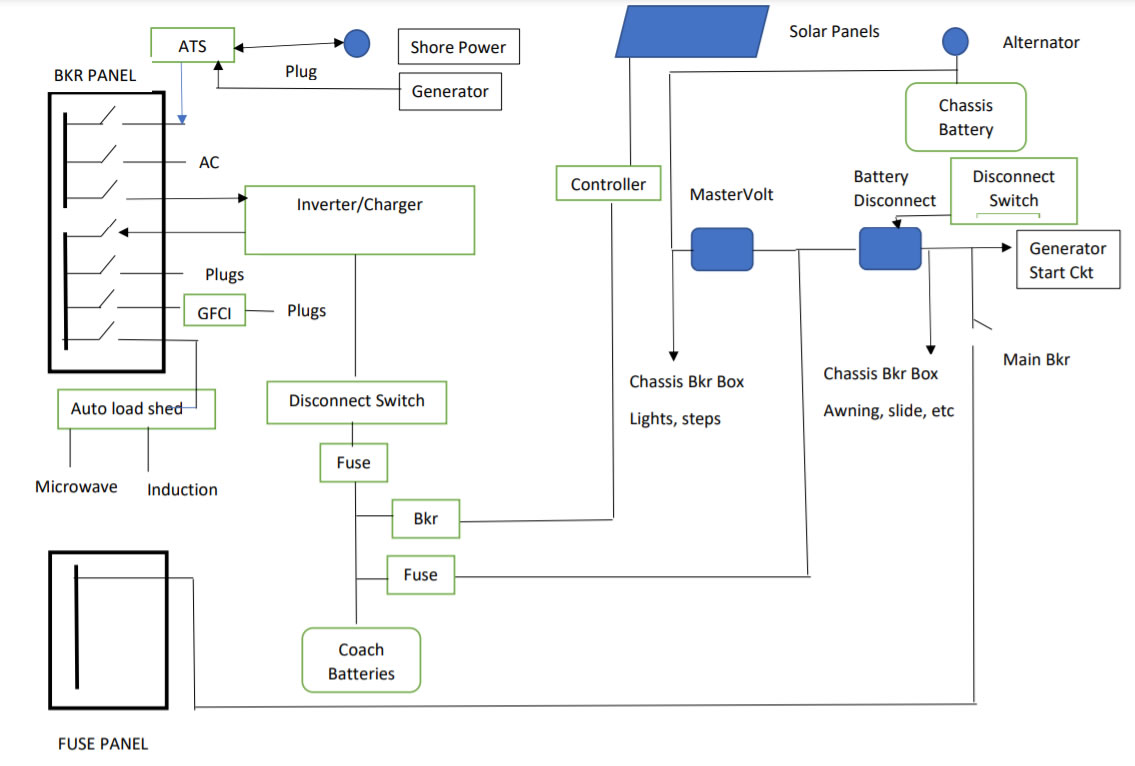
There was so much interest in Maureen Haggerty’s post on electrical layout that thought I’d upload this one. Electrical layout for 2020+ VNs. PDF version so it opens quicker with formatting intact
By Leonard Casella
March 20, 2021
There was so much interest in Maureen Haggerty’s post on electrical layout that thought I’d upload this one. Electrical layout for 2020+ VNs. PDF version so it opens quicker with formatting intact
Contributed by Bob Swor – March 20, 2021
The Recreation Vehicle Industry Association (RVIA) has recently published a document entitled “Q & A’s on Split Model Years for Motorhomes.” As the title infers, it relates to questions that can arise regarding the chassis manufacturer’s model year and the model year assigned to the completed motor home by the final stage motor home manufacturer. Below is the original memo from RVIA for your reference and information.
How is the manufacturing of motorhomes different from cars?
Motorhomes are “multi-stage vehicles.” This means that, unlike cars, they generally are built in two separate stages by two different manufacturers.
How is motorhome manufacturing divided into different stages?
The first-stage manufacturer, also called the “incomplete vehicle manufacturer,” assembles the motorhome chassis. This typically includes such components as the chassis frame, engine, fuel system, transmission, drive train, suspension, wheels, brakes and vehicular electrical system. These “incomplete vehicles” are then sold by the chassis manufacturer to final stage motorhome manufacturers, also called “completed vehicle manufacturers.” The motorhome manufacturers take the chassis and build the coach body, all of the “household” systems, install the appliances, cabinets, furnishings, plumbing, lighting fixtures and a multitude of various amenities, resulting in a completed vehicle.
How do first stage manufacturers identify their vehicles?
According to federal law, at 49 CFR 565.13(a), a vehicle manufactured in more than one stage must have a Vehicle Identification Number (“VIN”) assigned to it by the incomplete vehicle manufacturer. One character position in the VIN sequence identifies the model year of the incomplete vehicle. Once it is assigned, the VIN stays with the incomplete vehicle when it is sold to the motorhome manufacturer. The incomplete vehicle manufacturer may also ship the chassis with a Manufacturer’s Certificate of Origin (“MCO”). The MCO document provides information about each particular chassis.
How do final stage manufacturers identify their vehicles?
Final stage motorhome manufacturers continue to use the VIN assigned by the incomplete vehicle manufacturer. Motorhome manufacturers also provide MCO documents with their motorhomes when they are shipped to dealers. The model year of the completed motorhome, which is determined by the motorhome manufacturer, appears on this MCO document.
Why do some chassis have a different model year than the completed motorhome?
An incomplete vehicle chassis is manufactured before a completed motorhome is built on it. Motorhome manufacturers may buy hundreds, even thousands, of chassis each year. Because of variations in advance purchases of incomplete vehicle chassis, the flow of new product orders, market conditions and new model roll-outs, the model year of the incomplete vehicle chassis is frequently different from the model year of the completed motorhome.
What are some examples of model year differences?
A group of fifty chassis could be built at the end of a calendar year and assigned that year’s model year by the incomplete vehicle manufacturer. A few weeks later, those chassis could be sold to a motorhome manufacturer. The motorhome manufacturer may use half of them to finish production of one motorhome make, assigning those motorhomes the motorhome manufacturer’s current model year on their final MCO’s. These completed motorhomes would have a model year one year greater than the model year of the chassis. The motorhome manufacturer may later use the other half of the chassis in manufacturing a new motorhome design, assigning those motorhomes the next model year. As a result, their final MCO’s would have a model year designation that is two years greater than the chassis model year. In another example, a chassis manufacturer may decide to skip a model year entirely and designate its chassis one year ahead of the then current calendar year. This could result in motorhomes having a model year once year less than the chassis model year.
Who decides what the “official” model year of the vehicle is?
The final stage motorhome manufacturer has authority to designate on the completed vehicle MCO the model year of the completed motorhome. See Federal Trade Commission Staff Opinion (March 5, 2001).
Is it permissible to have different model years for the chassis and completed motorhome?
Yes, it is permissible. The United States Federal Trade Commission (“FTC”) has directly addressed this very issue and determined in a formal staff option that it is NOT an unfair or deceptive trade practice for the completed motorhome and its chassis to have different model years. In recognition of the fact that the final stage manufacturer has the authority to designate the model year for motorhomes, the FTC has stated that the incomplete vehicle chassis manufacturer may use the phrase, “Model Year – Not Applicable” on the MCO’s for the incomplete vehicles it sends to final stage motorhome manufacturers, if it so chooses. See Federal Trade Commission Staff Opinion (March 5, 2001).
Is the motorhome manufacturer required to disclose the difference between the model year of the incomplete vehicle and the model year of the incomplete chassis?
No. However, four states (California, Maryland, Michigan, and Wisconsin) require dealers to inform purchases of multi-stage vehicles of the difference between the model year of the incomplete vehicle chassis and the model year of the final stage motorhome.
What information is used by the state DMV offices to register motorhomes?
When a consumer has a new motorhome registered for the first time, the state DMV will use both the VIN assigned by the incomplete vehicle manufacturer and the model year and make assigned by the final stage motorhome manufacturer for the vehicle registration. All states should title motorhomes using the model year assigned by the final stage motorhome manufacturer.
What should I do if a state DMV registers a new motorhome with the chassis model year?
If a DMV employee insists on using the incomplete chassis model year, please call the Recreation Vehicle Industry Association at 703-620-6003 for assistance. Ask for the Government Affairs Department.
By Robert Oakman and Bob Kelly
February 11, 2021
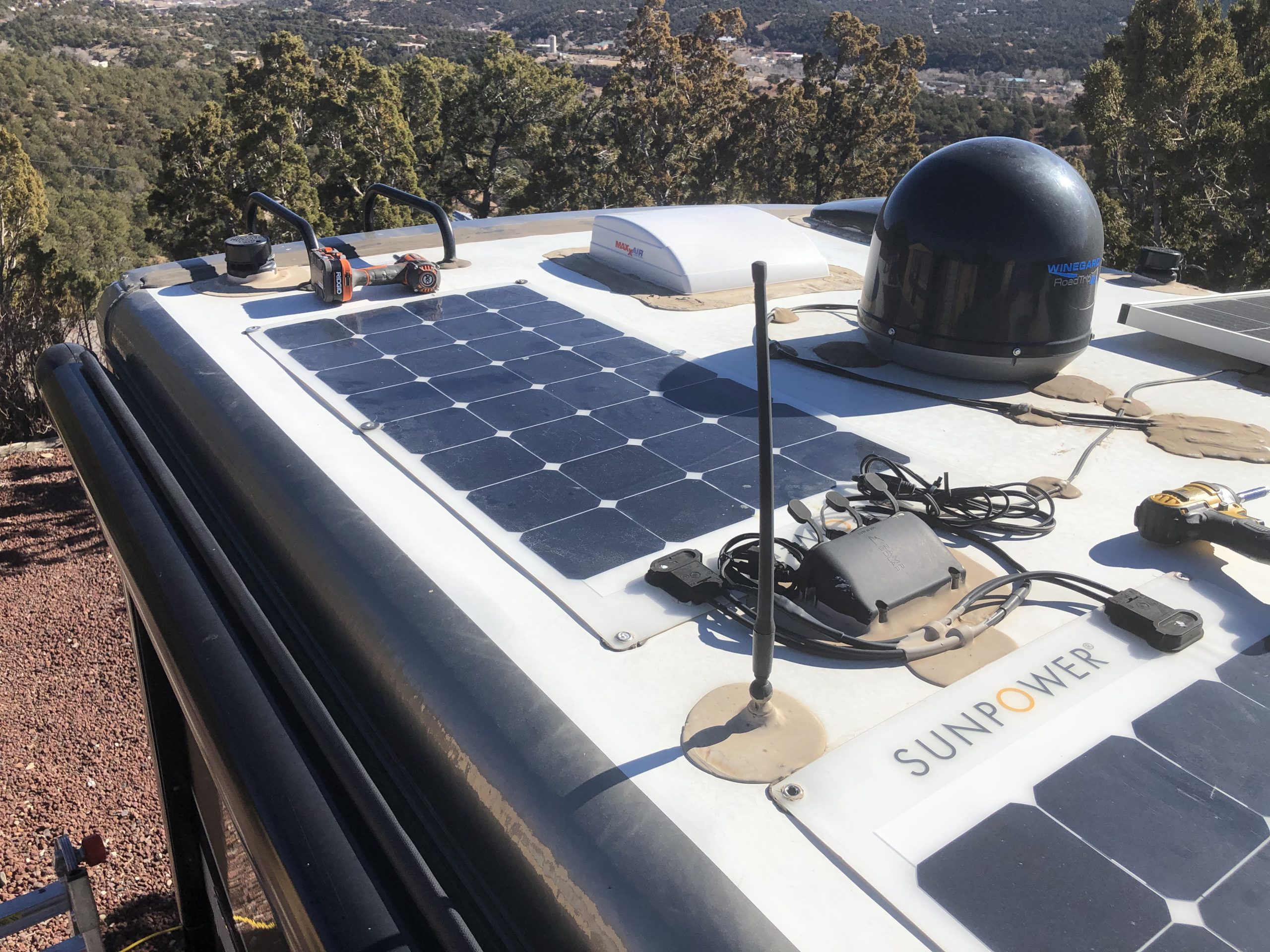
Rob Oakman has a 19D with flat ‘flexible’ solar panels mounted on the roof. When Winnebago manufactured the unit, they did not install flat flexible Zamp Panels, and substituted SunPower panels. The rest of the system is Zamp products. Rob was concerned amount the heat transferred to the roof, and the subsequent potential damage to the roof, i.e.: crazing and discoloration of the fiberglass, and opted to replace the panels mounted on the roof. The panels worked perfectly, both before and after removal. Read more “Flat Panel Replacement”
by Larry Galantis
Here is a cheat sheet for Fort De Soto Park Campground .
Water Sites;
5 Star – 103, 105, 107, 109, 130, 116
3 Star – 134, 132, 131, 115, 101, 99, 91,87.
2 Star Water Access – 142, 143,145,149,150,151, 128,136,137, 138, 138,137, 136, 135, 134 (close to sea wall to fish),
Notes
Site 87 is wide, and is the closest site to the entrance. It has lots of grass between the site and water
Best Playgrounds Site 123, and 125, but Site 125 has no water access.
Sites 128, 129. 130, 131, 132, 133 are by a playground, and a kayak launch spot, but with a restricted view.
Sites 131, 132, 133, 134 are by the playground, and are rated 5-3 star water access. 132 is the best of both worlds if you want playground and water.
Sites 142, 143, 144, 145 and 149 have kayak access.
Sites 142 and 143 little to no shade
Sites 151-152 also have kayak access.
Sites 200 to 206 are also on a seawall but kayak friendly.
Sites 209 and 210 are also kayak friendly, but 209 has an obstructed view. Site 210 has a limited view.
Sites 216 and 217 have kayak access with obstructed views.
Sites 229 through 231 have kayak access with obstructed views.
128-133 by playground AND kayak launch spot butwith restricted view.
142-145 and 149 kayak access. 142-143 little to no shade
151-152 also have kayak access. 200 to 206 also on a seawall but kayak friendly.209 and 210 also kayak friendly but 209 has obstructed view 210 has limited view.

Visit the Website
By Bob Swor
March 31, 2010
My fellow travelers have been complaining about my partially burned out LED upper brake light for two years. An OEM replacement for just one side was $40. I located two lamps on Amazon, and went with the two for $20 route. Thanks for the tips from Bob Kelly and Kent Gardam. The bonus with the new light is that has bright & less bright capability. This means I could add the turn signal function to the lamp. The extra red wire (turn) on the new light gets fished down the aluminum corner channel and connected to the amber turn signal light in the bumper. Read more “Upper Brake Light Replacement”
Information supplied by Ginny Dziadosz
March 31, 2020


The Slide-out failed when we were extending it. The motor continued to run in both directions but the slide did not move in either direction. The owner was able to move the slide in/out by using a crescent wrench to rotate the Slide-out’s drive shaft. The drive shaft is accessible above the Propane tank fill connection.
With the encouragement of several folks on the Yahoo View/Navion forum the owner decided to repair this himself. He stated it was easy to do, except that it was not fun having to work under the slide out – his knees were not what they used to be. Read more “Slideout Repair on an 08VH”
By Leonard Casella – November 2019
The DC version only has the 12VDC connection, it does not have the 120AC connection – that appears to be the only difference.
Why doesn’t your refrigerator work when voltage drops to 12.2 volts or lower?
Answer, it’s designed that way! Read more “Compressor Refrigerator”
by Ojciec Dyrektora, November 2019
A few notes: These car registration fees are for passenger cars only; states charge different fees for RVs, trucks, antique cars, etc. The numbers we found are current as of 2019, but it’s smart to check the current numbers with your state department of motor vehicles.
By Bob Kelly, November 2019
 “Which generator should I look for when selecting an RV?” is a question often asked. The answer to that question really depends upon the type of camping you do. If you have occasional generator use, the propane generator is cheaper to buy, the cost of the propane is minimal, and availability of propane doesn’t actually matter.
If you boondock, or dry camp all the time, it depends upon what you want to run. Running the generator in the morning for coffee or a skillet, and in the evening for the microwave, you still have low 120V consumption, the propane will be OK.
If you have Solar on the roof to charge the batteries, it will diminish the need to recharge the house batteries if you stay in one place, don’t drive, for an extended period. My 300W of solar kept my batteries charged all summer (The Cole Hershee relay for charging was broken). Read more “Generator Choice, Propane or Diesel?”
 ar.
ar.